


Employer Prevails in General Duty Clause Case
The Occupational Safety & Health Administration (OSHA) has a multitude of regulations to which concrete and construction contractors must adhere. Most of the construction...

Enforcement Begins on New Workplace Exam Rule
On October 1, 2018, enforcement began in earnest by the Mine Safety & Health Administration (MSHA) for its revised standard governing workplace examination requirements...

What About Taxes?
By Christopher Scott D’Angelo
In the July 2020 article, I focused on contractor responsibilities for operations and worksite safety relating to COVID-19 and the pandemic...

Planning for Weather Delays
As hurricane season is fast approaching for many states along the United States eastern seaboard and in the south, inclement weather will soon be...

Owner Concerns
By Danielle Waltz and Patrick Estill
The modern contractor is no stranger to dealing with increased building costs and delays in getting project inputs to...
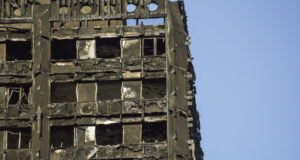
Widespread Failures
In September 2024, the panel investigating the 2017 fire in the Grenfell Tower in London, England, which killed 72, issued its final report, placing...

Negotiating Change Provisions, Change Orders, and Change Directives
The Greek philosopher Heraclitus once wrote that nothing endures but change. That adage certainly holds true in the construction industry. Nearly every construction project...

OSHA Emphasizing Corporate-Wide Settlement Agreements
It is no secret that the Occupational Safety & Health Administration (OSHA) is making it tougher to settle cases, at least on terms that...

Claims and Defenses to the Owner’s Actions
With many construction projects, it is an all too familiar scenario where the project is being delayed or impacted through the actions of the...

Droning On
By Christopher S. Drewry and Jeffrey M. Kraft
Unmanned Aircraft Systems (UAS)—more commonly referred to as drones—have seen rapid growth in use across a variety...