
I didn’t necessarily map out a career trajectory, but sometimes asking questions, maintaining curiosity, and keeping a willingness and desire to learn can help you grow professionally, open doors, and take you from the job site to the boardroom. I’m living proof.
I joined Hexagon Geosystems in January 2018 and soon after assumed the role of vice president of construction. However, my career in the construction industry began after high school when I started working on project sites.
While I couldn’t have envisioned the exact path it would take, I knew that following my curiosity would serve me well throughout my career. What I didn’t anticipate at the time was that because my roles weren’t limited to one area, I had the opportunity to learn different disciplines, and I took advantage of the opportunity.
I started my career as a grade checker when GPS and similar technologies were not yet available. I worked as a pipe layer and eventually ran the machines on the job.
What I didn’t realize is that these different roles helped me see projects holistically from everyone’s perspective. Everyone looks at the job site differently, and as I took on different roles, I learned how to see the site from multiple perspectives.
The next generation of workers is progressing in their careers, with many looking to follow a similar path. One of the most significant opportunities for me now is to share advice with younger workers navigating the modern construction industry and help them establish a successful career trajectory.
HOLDING DIFFERENT ROLES IS THE KEY
Throughout my career, I have had opportunities to learn new skills and take on new positions, all of which have helped me gain a 360-degree view of the industry. That included moving into business management, procuring equipment, setting budgets, and joining a construction company’s executive leadership team.
While my diverse experiences were fantastic, I know my education is never complete. Even today, I have the opportunity to keep learning about the industry from its many perspectives.
When an opportunity arose to work for a company that owned two original equipment manufacturer dealerships and wanted to start a technology dealership, I thought, “I don’t know anything about construction technology.” Instead of letting my lack of knowledge hinder me, I knew it was another opportunity to continue learning.
There were real benefits to that, as it allowed me to see the other side of the customer’s interactions when buying equipment and to understand that their need for the physical product was just as important as how they acquired it. It had to fit their financial and physical needs.
It also introduced me to the world of construction technology, which provided me with the opportunity to run a smaller business unit within a much larger, highly disciplined company.
NEW WINDOW INTO THE REAL WORLD
The greatest benefit of experience is the ability to see others’ positions. I’m not suggesting I can see everyone’s positions perfectly, but I can see them more clearly than if I hadn’t had the experiences I did.
In our line of business, I don’t often encounter someone who has sat at all three of those locations. No two companies have the same needs; understanding how they might approach their business has been vital.
Making decisions about products, pricing, and support requires taking time to put each of those hats back on and consider how this model works for us, for dealers, and perhaps most importantly, for the customer.
Even when breaking down the target, it’s clear that they don’t all have the same needs. A large company does not necessarily have the same needs as a small excavation company down the street. They share some common needs, but their businesses and their cultures have different structures.
As technology providers, we can’t partner with every company in the same way; we have to tailor our approach.
Start with what you’re doing now, then look at what you’re working on next. Ask yourself, “How can I continually improve?”
MY ADVICE TO YOUNGER WORKERS
The idea of continuous improvement applies to any profession or industry, not just construction. The key is to find something you are interested in and passionate about.
I often tell those who are starting their careers to make sure to invest in others, just as someone undoubtedly invested in you and your development. By doing so, you are paying it forward and developing someone else who may be a step or two behind you.
Remember that someone provided opportunities to you, so it’s your obligation to find someone to pull up with you.
The last piece of advice is that, as you gain new skills and opportunities, remember that the best way to advance in any company is to make yourself obsolete in your current role.
It goes back to an old saying: “Build such a strong team around you that no one knows who the boss is.” Once you do that, the company looks around and says, “That’s running pretty well. We have some challenges over here; could you look into those?”
A NEW APPROACH TO EACH DAY
There is a popular five-minute video that talks about getting 1 percent better every day. The idea is that if you just committed to getting 1 percent better every day, by the end of the year and by the end of 10 years, you wouldn’t even recognize yourself.
I think that is an imperative to success; life really is about eating the elephant one bite at a time. That’s why they call it a career, not a task.
Everyone has 20 issues, and you can’t solve them all today. But you can make a difference with one of them today.
Then, as we go, we solve some of the issues, and new ones emerge. That’s just life, and that’s the changing of markets and products.
It’s about getting into that mindset of making a difference and an impact today. Then tomorrow, you can work on other aspects of yourself.
about the author
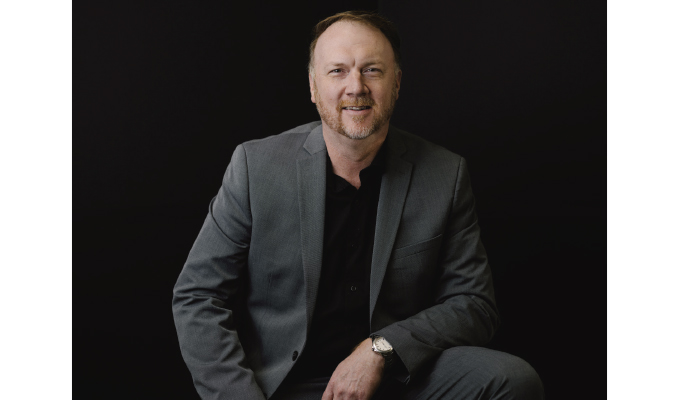
Troy Dahlin is vice president of construction US/CAN with Leica Geosystems part of Hexagon. For more, visit www.leica-geosystems.com.