

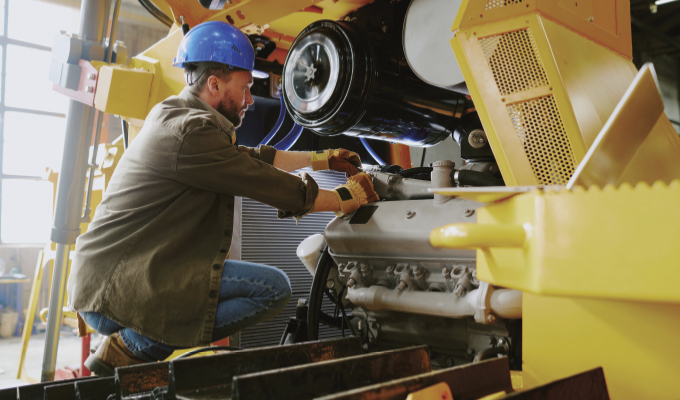
For many contractors, unplanned equipment downtime and excessive maintenance costs are profit killers. A machine that fails mid-shift on a critical activity doesn’t just create a repair bill. There’s the added cost of jobsite disruption and reactive decision-making that erodes margins project by project. Deferred or missed preventive maintenance typically leads to repairs that could have been avoided and higher overall costs. In both cases, the solution is the same: better data sharing, automation, and visibility into equipment health.
The good news is that the technology to improve equipment maintenance practices is more accessible and easier to integrate than ever. Telematics systems log machine hours, fuel burn, fault codes, and utilization in real time. Field crews capture equipment hours and production quantities digitally. Project management platforms track schedules and resource allocation. And purpose-built maintenance management software now brings automated preventive maintenance, work order, parts inventory, and inspection processes together in one place. Telematics systems increasingly connect directly to scheduling and dispatching tools, so maintenance requirements inform deployment planning, and deployment needs shape when maintenance gets done.
Purpose-built maintenance management software delivers significant value on its own by automating PM schedules, centralizing work orders and inspection records, and giving shop managers a planning horizon they can actually work from. The advantages compound further when that software connects to field reporting and scheduling tools, creating visibility across maintenance, production, and deployment in a single operational picture. For contractors relying on telematics data—often from multiple providers or equipment manufacturers—dedicated maintenance software gives them a place to aggregate that data and act on it systematically.
PREDICTIVE SOLUTIONS
Automated maintenance management software has fundamentally changed how preventive maintenance gets executed. Where traditional PM ran on remembering fixed intervals (e.g., change the oil every X hours, replace filters every Y months), modern systems use actual machine hours, meter readings, and calendar dates to trigger service reminders, generate work orders, and stage parts automatically. Instead of relying on someone to manually track when a service is due, the software does it continuously based on real utilization data.
That’s a meaningful improvement, but it still operates on schedules set in advance.
Predictive maintenance goes one step further. AI-powered platforms fed by integrated data streams have demonstrated the ability to identify potential equipment failures weeks in advance. For a contractor managing critical-path equipment on a tight schedule, that lead time is the difference between a scheduled repair and an emergency breakdown mid-shift.
Reaching that level of foresight requires consistent, reliable data flowing from the machines themselves. Most civil fleets run equipment from multiple manufacturers, and many fleet managers have navigated the resulting data fragmentation for years. ISO 15143-3 (AEMP 2.0) is one international standard that is designed to help solve this problem by defining a common, vendor-neutral telematics data schema that allows fleet management and maintenance platforms to aggregate machine data across brands without custom integrations or manual normalization.
CLOSING THE GAP
Effective maintenance, whether preventive or predictive, depends on accurate timely data from multiple sources. Machine hours from field reports are one input. Telematics systems contribute fuel consumption, idle time, fault codes, and other meter readings. Some contractors rely on regular inspections or an all-of-the-above approach to capture this data.
Calendar-based intervals matter too, independent of utilization. When any of these data streams are disconnected—crews logging time in spreadsheets, inspection records living in paper binders, telematics data siloed in a manufacturer portal—service intervals drift.
Electronic field-reporting applications integrated with maintenance applications solve this by capturing equipment hours in structured formats that flow directly into maintenance management systems. Machine hours logged in the field automatically update PM schedules; therefore service intervals stay current, parts can be ordered ahead of need, and shop managers can plan technician scheduling around project downtime rather than reacting to failures. Field crews can also flag repair needs such as a cracked windshield, a hydraulic leak, or anything that needs attention directly from the field log, including a severity level that routes automatically to the maintenance team. Parts can be staged, a technician scheduled, and a minor issue addressed before it becomes a major one.
This connection also creates a record of how individual machines are actually performing in the field. Production data, when visible alongside telematics feeds, can reveal performance anomalies, such as a machine consuming more fuel than comparable equipment on comparable work, or productivity declining in ways that don’t yet show up as fault codes. That’s an early warning system with more nuance than telematics alone provides.
COMPOUNDING CAPABILITIES
General-purpose, offline work-order systems can track and manage repairs, but purpose-built construction maintenance management software connects work orders, parts inventory, inspection records and technician scheduling to live utilization data in ways that change how shop managers operate.
A service interval approaching on a machine running a critical-path activity gets flagged in time to schedule it during the right project window. Parts that would otherwise be emergency-ordered are already on the shelf. Inspection records tied to specific machines build a maintenance history that informs future decisions about repair-versus-replace thresholds, which equipment types accumulate more unplanned downtime, and where deferred maintenance is quietly building risk.
When that utilization and cost data feeds back into project cost tracking, the true cost-per-hour of operating specific machines becomes visible over time. That visibility sharpens future estimates and gives project managers better inputs for rent-versus-own or repair-versus-replace evaluations, a downstream benefit of maintenance discipline that rarely gets credited.
For construction firms ready to close that gap, three questions are worth asking of your current technology stack.
- Are you getting accurate, timely equipment data and using it to automate preventive maintenance through purpose-built maintenance software? Manual tracking and disconnected data sources introduce lag and error.
- Do your maintenance, field operations and scheduling tools share data in a way that gives your team a complete picture in one place?
- Do the vendors in your technology stack support ISO 15143-3 compatibility across your mixed fleet? Without a common data standard, the integration work becomes a recurring maintenance problem of its own.
Those three questions won’t answer everything, but they will quickly reveal where the connections exist, where they’re missing and where the most immediate gains in equipment reliability are ready to be taken.

about the author
Jennifer Angrisano is a senior business analyst with Trimble. With over 15 years of experience in the heavy construction sector, she helps organizations define needs and adopt solutions to improve maintenance practices.