
The construction industry is at a crossroads. Demand for new infrastructure and development is rising fast, but a severe labor shortage threatens to slow progress. As seasoned professionals approach retirement, companies are struggling to find new talent, creating a widening gap that’s impacting project timelines and overall industry productivity.
Meanwhile, the next generation of workers has grown up in an era of connected technology. They expect their professional tools to be as intuitive and integrated as the personal devices they use daily.
The tolerance for redundant data entry and siloed information systems is low. The incoming builders demand real-time visibility and quick access to the information they need to do their jobs. Yet, many companies still don’t have centralized systems to track real-time project status, creating friction and inefficiency that can scare off tech-savvy workers.
BEYOND HAMMERS AND HARD HATS
According to the National Center for Construction Education & Research, 41-percent of the current construction workforce will retire by 2031.
Time is flying by, and more general contractors are getting involved. In fact, Juneau Construction, Atlanta-based general contractor, is hyper-focused on workforce development and the team even has a company committee dedicated to this effort.
Patrick Parkman, senior scheduling manager at Juneau Construction, explains that a lot of younger people do not realize all of the opportunities that lie within construction. “We need to help people better understand the construction industry—what it’s about, what opportunities it offers, and how it works,” he says.
Juneau’s approach is to engage with high school students and beyond to showcase the many roles that exist beyond field labor. From marketing and business development to pre-construction, scheduling, and Virtual Design and Construction (VDC), the industry offers a wide range of career paths that may appeal to people with diverse skill sets and interests.
The team has hosted resume workshops and even offered hands-on activities like layout exercises. Most recently, a job shadow program gave students a two-day deep dive into different departments, wrapping up with a mock pricing and scheduling challenge based on a real downtown remodel project.
Patrick explains, “It’s really important to make sure that everybody understands you don’t have to be the person out in the field swinging a hammer.”
POWER OF VISUAL COMMUNICATION & COLLABORATIVE TECH
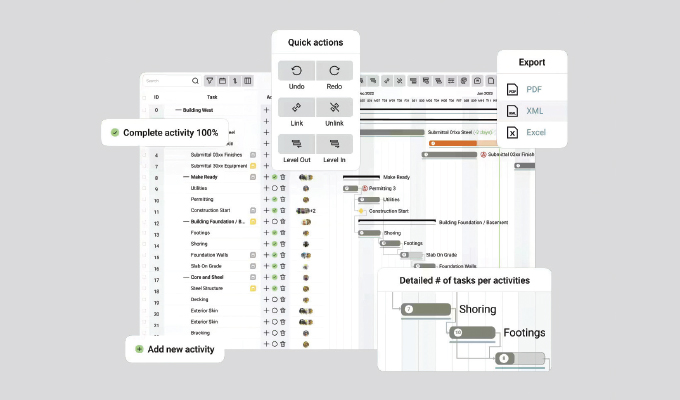
Trying to make sense of a massive Gantt chart and the associated drawings—while also getting the design team, owner, and subcontractors aligned—is no small feat.
Visual tools are essential for improving communication and clarity. Patrick’s top picks at Juneau include Outbuild for construction scheduling and planning, Autodesk for BIM modeling, Buildots to track production, DroneDeploy for visual documentation, and CM Builder for logistics. He says these tools make it simple for every stakeholder to grasp the project plan and workflow.
The inherent accessibility and collaborative nature of cloud-based tools align perfectly with the expectations of a modern workforce that values seamless information sharing and remote access.
MENTORSHIP
Another key to attracting and retaining talent is effective mentorship, especially the transfer of knowledge from experienced professionals to those new to the industry. At Juneau, this happens organically.
At Juneau, experienced superintendents freely share their knowledge with newer team members, and regular jobsite walks provide invaluable opportunities for younger professionals to learn firsthand about sequencing, problem-solving, and the practical considerations that inform construction decisions.
Patrick says it’s important for the younger team members to walk the job about once a week with the seasoned superintendents. It allows the team members who have been around for a while to explain why they’re doing things a certain way and why they’re sequencing the work the way they are.
This culture of mentorship where experienced professionals are eager to guide and support the next generation is a big draw for new talent looking to learn and grow within the industry. It creates a sense of community and shared purpose, critical to retaining employees long-term.
EMBRACING TECH
The construction industry must embrace modern technology and innovative talent acquisition strategies to address the labor shortage. Companies that invest in user-friendly, collaborative software solutions not only improve their operational efficiency but also position themselves as forward-thinking employers that can attract and retain the next generation of skilled professionals.
As Patrick said, it’s all about broadening the perception of construction careers, showing the many opportunities available, and providing a tech-driven work environment that aligns with the expectations of the modern workforce.
Visual communication tools and cloud-based platforms are key to making the industry more attractive and accessible. And, organic mentorship ensures the experience of the older generation is passed on to those who will shape the future of construction.
To survive the labor shortage, the construction industry must take a bold and transformative approach to talent and technology. By being forward-thinking, we can bridge the generational gap and build a better future for the industry.
for more information
Outbuild is fully integrated scheduling and field-coordination software built specifically for construction. For more, visit www.outbuild.com.