

Ask a general contractor what wins bids right now and you’ll hear the same thing on most jobsites. Price is still a pain point, but availability is often the deciding factor. The subs getting the work are the ones who can put a crew on site when the schedule says so, and everybody bidding concrete and rebar knows it.
The numbers behind that shift are sobering. Associated Builders and Contractors reports that the industry needs 349,000 net new workers in 2026, on top of normal hiring, just to keep pace with demand. Their model has that figure climbing to 456,000 in 2027 as construction spending rebounds, with every additional $1 billion in spending generating demand for roughly 3,450 jobs.
Most of the coverage around those numbers has focused on megaprojects and the headline trades. Far less attention goes to how the labor math is reshaping scopes that project teams have treated as settled for decades. From where I sit, working with developers in the earliest stages of planning, the parking structure is near the top of that list.
WHY THE GARAGE LOSES THE CREW COMPETITION
A cast-in-place garage is one of the most concrete-intensive scopes on a mixed-use or commercial site. It pulls formwork, rebar, and placement crews from the same finite pool as the floors above it, and when schedules compress, those crews go where the revenue is. The garage almost never wins that fight. It becomes the scope that absorbs the slip while everyone watches the floors that lease or sell.
And the pressure is building. A large share of the projected shortfall is demographic, with experienced tradespeople leaving faster than new ones arrive. By ABC’s count, nearly one-fifth of all electricians are over 55, and the concrete trades are riding a similar curve. Now layer on the data-center boom pulling from the same regional labor pools, often with deeper pockets and longer pipelines. A garage scope that penciled comfortably under 2019 labor conditions now waits in line behind work that pays crews more to show up sooner. Sequencing assumptions carried over from the last cycle simply don’t hold true anymore. The garage deserves the same risk scrutiny as everything above it.
SCHEDULE RISK HAS MOVED TO THE DESIGN TABLE
In early-stage conversations with developers, I now hear contingency and phasing discussions turn on the parking scope. Parking has always had a seat at the first budget meeting, but as a cost question. How many stalls, at what price per stall? What’s new is hearing it raised as a schedule question, with teams asking whether the garage is the scope that puts the delivery date at risk. A few years ago, that question didn’t come up. Today, it’s shaping timelines before the drawings are even advanced.
Municipal requirements are compounding the exposure, because even the count itself is less settled than it looks. Plenty of cities are dropping formal parking minimums, and the headlines make it sound like parking obligations are shrinking everywhere. On the ground, it looks different. I regularly hear from teams who moved through scoping confident their count was final, only to have the municipality review the project and add stalls over congestion concerns or some other site-specific issue. Suddenly, the plans are open again and the count is going up.
That late change lands on the worst scope at the worst possible time. The added requirement is concrete-heavy work in a market where concrete crews are the most difficult labor force to secure, and it arrives after the schedule was built around a smaller number. The only real protection is treating the count as open until the municipality has formally signed off and carrying contingency that assumes they’ll move it. That can feel like over-caution; right up until the review letter arrives.
SCHEDULE RISK IS COST RISK
When a concrete-heavy scope is exposed to both crew availability and entitlement changes, the contingency has to live somewhere, and in the budgets I see, it increasingly lives in the parking line item. The AGC’s most recent workforce survey found worker shortages are now the leading cause of project delays, with 45 percent of firms reporting delays tied to their own or their subs’ labor gaps. On a financed development, delay converts straight into carry costs and pressure on lender timelines. Developers have always carried contingency against what the garage costs. Carrying it against when the garage finishes is the new line in the budget.
Most of that contingency is avoidable, but only at the front end of a project. Put parking in the earliest planning conversations, right alongside structural system selection and site logistics, because parking approaches carry very different labor profiles.
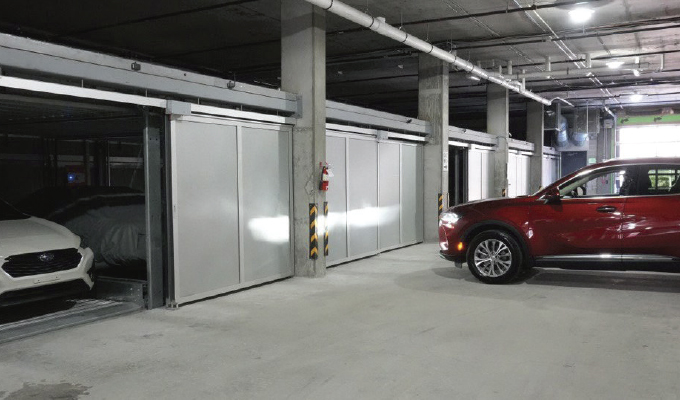
Conventional cast-in-place is the most field-labor-intensive path, with concrete crews on site for the duration of the structure. Precast shifts much of that work into a plant and compresses the field schedule. Stacker and mechanical systems shrink the structural scope itself, delivering the same count with less concrete to place at all. Each carries its own trade-offs on cost, site fit, and operations, and which one makes sense comes down to the specifics of the site.
The point is that when crews were plentiful, the labor profile barely figured into the selection. Today, it’s material enough to drive it, and it’s a question worth answering before the design is locked rather than after a municipality reopens the count.
PLAN LIKE IT’S PERMANENT
Nobody in this industry needs convincing that the shortage is here to stay. Demographic attrition keeps removing tradespeople faster than the industry replaces them, infrastructure and data center demand is committed years out, and the shortfall projections run through 2027 and beyond. What lags behind that consensus is planning behavior. Projects are still scoped, scheduled, and budgeted as if the crews will be there when the schedule calls for them, and on concrete-heavy scopes, they increasingly aren’t.
So, plan for that. Pressure-test the labor assumptions inside every concrete-heavy scope on the books. Hold the parking count open until the municipality has formally signed off, and price the risk of them changing their mind. Above all, get the parking decision onto the design table in week one, where its labor content, schedule exposure, and entitlement risk can be weighed while there’s still room to choose. Parking earned its place in the budget conversation a long time ago. The labor market just gave it one in the schedule conversation, and project planning needs to catch up.
about the author
Christopher Tiessen is president/CEO of KLAUS Multiparking America, the U.S. division of German parking system manufacturer KLAUS Multiparking GmbH. The company specializes in space-efficient parking systems, including stackers, lifts, and automated parking technologies. For more, visit us.multiparking.com.