
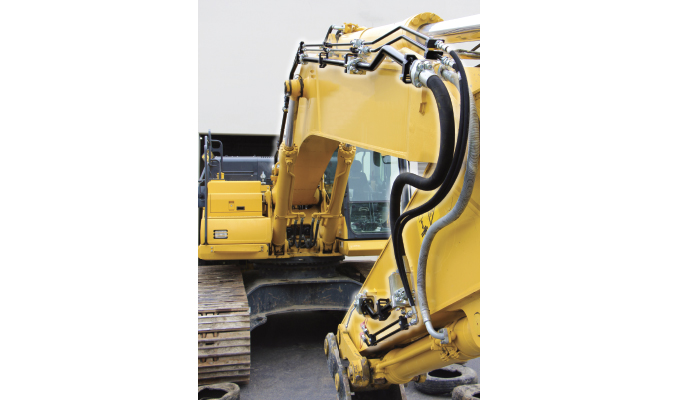
A contractor spec’s a new excavator with auxiliary hydraulics, takes delivery, and then buys a rotating shear. The machine has the plumbing. What it does not have is the control the tool actually needs: proportional flow to more than one function at a time, settings matched to that specific attachment, and a way for the operator to run all of it without hunting for a switch. The factory auxiliary function was designed to turn a breaker on and off.
That gap is showing up more and more, and it comes from two developments moving at once. Attachments have grown considerably more capable. Machine controls have gone electronic. Either alone would be manageable. Together they have raised the bar for what it takes to put a tool on a carrier and have the pairing actually work.
WHAT TODAY’S ATTACHMENTS ASK FOR
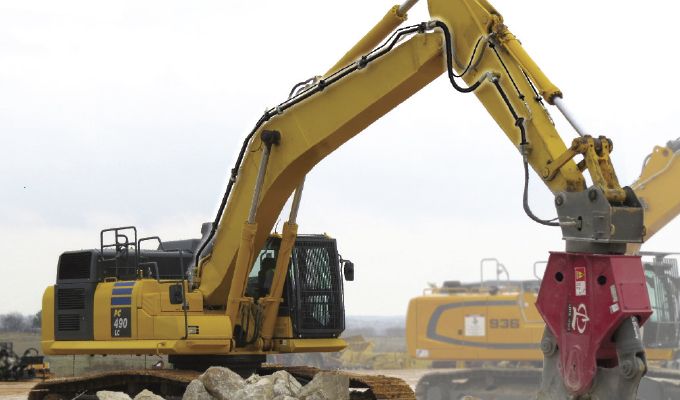
Buyers are often surprised to learn that a machine equipped from the factory with one auxiliary function may still fall short of what a modern tool requires. It is worth knowing what these attachments are asking for:
Proportional flow, not on and off—A sorting grapple or rotating shear needs metered control, so the operator can feather a movement rather than trigger it.
More than one function at a time—Independent rotate and clamp, or rotate and cut, means two functions running simultaneously and independently.
Settings matched to the tool—Flow and pressure appropriate to a breaker will not suit a mulcher or a compactor, and the machine needs a practical way to change between them.
Controlled motion under load—Load holding and smooth stops matter when a tool is carrying weight at reach.
Several tools on one carrier—A machine that cycles through three or four attachments needs control that adapts quickly, without a technician.
A single factory auxiliary function handles the simplest of these cases well. It was rarely designed for the rest. That is the practical reason contractors with properly equipped machines still find themselves adding capability.
THE CONTROL SIDE IS CHANGING TOO
At the same time, the way machines manage hydraulics is shifting. For decades an operator’s joystick moved oil, with pilot pressure traveling from the lever to the main control valve. On newer machine generations, the joystick is increasingly an input device, sending an electronic signal to a controller that decides what the hydraulics do next.
This is not universal yet. Fully networked, CAN-based control is still limited to the most recent model generations from certain manufacturers, and most fleets are running a mix. But the direction is clear, and a machine purchased today will likely still be working when the architecture is standard. That makes it worth understanding now.
THREE WAYS CONTROL GETS DELIVERED
When capability is added to a machine, the control can be handled three different ways. The first two are legitimate engineering choices driven by the application. The third is where problems start.
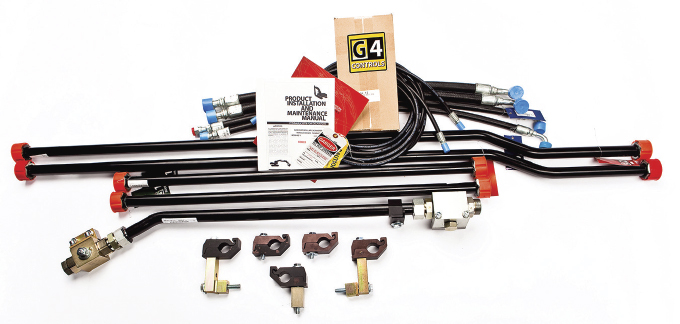
Integrated into the machine’s own controls—The added function is introduced into the existing control architecture. The operator actuates the tool from the factory joystick, and adjustment happens in the machine’s monitor alongside every other setting. The machine recognizes the function as legitimate. Where a machine supports it, this is the cleanest result.
An independent control system—The added function is managed by its own dedicated controller, operating alongside the machine rather than inside it, and delivering proportional control on its own terms without introducing fault codes. This is frequently the right answer, and sometimes the only one, because plenty of machines have no factory system or function capable of covering the application. A well-engineered independent system can deliver control an older or simpler machine could never provide on its own.
Borrowed or mimicked capability—The added function reroutes something the machine already does, or imitates a signal to make the equipment respond. Nothing new is contributed. Something existing is taken, or fooled.
WHERE THE THIRD APPROACH COSTS YOU
The trouble with borrowed capability rarely appears at installation. It accumulates.
The operator loses something. A control that worked last season now does something else, or the two functions cannot run at the same time, which slows down exactly the work the tool was bought for.
Diagnostics get harder. When a system mimics signals the machine’s software is monitoring, the equipment may log conditions it cannot explain. A technician then troubleshoots a machine that no longer matches its own service documentation, and that exploration is billed by the hour.
Records get complicated. Systems that alter or imitate factory signals can raise questions during service disputes, muddy telematics data, and give a buyer’s inspector something to ask about at resale. Note the distinction: A properly engineered added system, whether integrated or independent, does not create these problems. Systems that interfere with what the machine is already doing can.
WHY ROAD AND BRIDGE WORK FEELS IT FIRST
Highway and structure work concentrates all of this. One carrier may cycle through a breaker, a shear, a grapple, and a broom in a single project phase. Fleets are mixed, with several manufacturers and model years on the same site. Operators rotate between machines, sometimes daily.
In that setting, consistency has real value. An operator who steps into any machine and finds tool control in a predictable place is productive immediately. Across a crew and a season, that adds up.
QUESTIONS WORTH ASKING
Before adding capability to any machine, ask the dealer four things. Will this deliver the specific control my attachment requires, including proportional flow and simultaneous functions if the tool needs them? Does the system operate without generating fault codes on my model? Where does the operator control it, and where are settings adjusted? And does it add capability to the machine, or borrow capability the machine already has?
The right answer is not always full integration into the machine’s controls, because not every machine offers that path. The right answer is a system engineered for the application that leaves the rest of the equipment working exactly as it did before.
about the author
Robert Burnett is vice president and general manager of HKX, Hydraulic Kits for Excavators, and has spent decades in auxiliary hydraulic system design and application work. For more, visit www.hkx.com.