

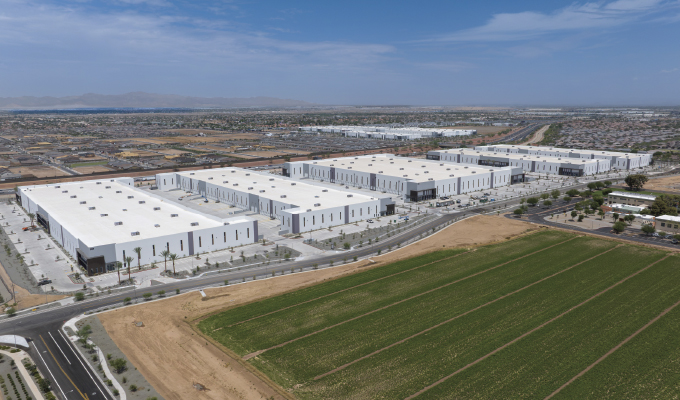
For Suntec, the largest commercial concrete construction company in the Southwest, rapid growth had added new layers of complexity to scheduling across projects and teams.
The company, which manages approximately $250–$300 million annually in industrial and data center construction and employs nearly 2,500 people, was using three different scheduling environments at various stages of a project. Preconstruction schedules lived on individual hard drives. Project teams would rebuild schedules in Microsoft Project once work began, after which a dedicated scheduler recreated those schedules again in Primavera P6 to provide enterprise-level reporting. This created additional coordination requirements between what was sold, planned, and ultimately executed.
“As our operations grew, the number of schedulers and stakeholders involved grew with it,” says Richard Chazal, director of industrial at Suntec Concrete. “That made alignment across teams more critical than ever.”
To streamline the process, Suntec turned to Elecosoft and two of its flagship products, implementing both solutions companywide in early 2026:
Asta Powerproject, a construction-specific scheduling platform, helps project teams plan, manage, and resource-load projects. Asta Vision, an enterprise project, controls platform that centralizes schedule data and provides visibility into resources, project performance, and workforce planning.
SEARCHING FOR THE “GOLDILOCKS ZONE”
Suntec’s challenge was finding a scheduling platform that balanced usability with enterprise-level capability. Microsoft Project was easy for project managers and field personnel to use but lacked the resource management and reporting capabilities needed across the organization. Primavera P6 offered powerful scheduling functionality but required specialized expertise that kept scheduling away from the people actually performing the work. As a self-performing contractor operating under a Last Planner-style philosophy, Suntec wanted scheduling to remain in the hands of those closest to project execution. Or, as Chazal notes, “We want the people closest to the work to do the scheduling.”
After evaluating multiple options, Suntec determined that Asta Powerproject offered the balance it had been seeking. “I was trying to find what I call the Goldilocks zone for scheduling,” Chazal says. “Something approachable for project teams but robust enough to provide enterprise-level data. In other words, ‘just right.’”
The transition began in late 2025. Chazal engaged scheduling consultant Bill Jack Daniel of Danbridge Consulting and used the opportunity to pilot Asta Powerproject, a platform he had successfully used in a previous role. The pilot moved quickly. Suntec received approval at the end of 2025, launched the pilot in January, signed an agreement before the end of the month, and completed full implementation by March 1, 2026. The speed of adoption reflected the company’s confidence that the solution could address both project-level and enterprise-wide scheduling challenges.
ELIMINATING WASTE, CREATING CONTINUITY
One of Suntec’s primary objectives was eliminating the waste associated with maintaining multiple schedules. With Asta Powerproject and Asta Vision, schedules now originate during preconstruction and remain connected throughout the project lifecycle. When a project transitions from estimating to operations, project managers inherit the existing schedule rather than rebuilding it from scratch. This approach provides continuity between what is sold and what is executed while ensuring all stakeholders work from a single source of truth.
The system also eliminates another common frustration. “My pet peeve was always asking, ‘Where did you save the schedule?’” Chazal says. “Now I never have to ask. It’s in Asta Vision.”
For Suntec, scheduling is about much more than dates. As a self-performing contractor with thousands of field personnel, labor availability is the single greatest constraint on growth. The company tracks projects based on crews, labor hours, and resource loading, making workforce visibility critical to operational planning.
“Our ability to take on additional work is closely tied to the availability of skilled teams,” Chazal notes. “That makes having clear visibility into our workforce essential for planning and growth.”
That’s where Asta Vision comes in, giving Suntec visibility into crew availability and resource demands across all projects, allowing managers to identify labor shortages or excess capacity months in advance. Rather than relying solely on backlog revenue, Chazal reviews manpower curves and crew availability two to six months into the future to determine whether the company should pursue additional work or be more selective about new opportunities.
“Looking ahead at labor capacity, not just revenue, helps us make smarter decisions about which opportunities to pursue and when,” he says.
This level of visibility is particularly valuable for concrete operations, where successful execution depends on having the right crews accessible at precisely the right time. “When we’re pouring concrete on Tuesday night, we need to know if 26 finishers, four flatwork people, and a laser screed are available,” Chazal explains. “For us, labor is just as important as the start and finish dates.”
SUPPORTING OPERATIONS AND EXECUTIVE DECISION-MAKING
Today, Asta Powerproject is used primarily by project managers, construction managers, operations managers, and Suntec’s single scheduler. Field leaders rely on the system to understand upcoming project demands, crew assignments, and workforce requirements across multiple jobs. The platform is also helping the company explore more advanced performance analytics. Using data exported from Asta Vision, Suntec is developing dashboards that compare schedule progress against budget performance. The goal is to identify which projects are outperforming expectations and which may require additional support.
“I need clear visibility into which projects are performing well and where we have opportunities to improve,” says Chazal. “Understanding that helps us replicate success and continuously strengthen performance across the business.”
Perhaps the most significant outcome has been user adoption. Before implementation, Chazal anticipated resistance from project teams accustomed to Microsoft Project.; instead, the transition has been remarkably smooth. Project teams have retained ownership of their schedules while gaining greater visibility across the organization, a balance that has supported strong adoption. “My favorite thing to hear is, ‘Oh my goodness, this is so easy to use,’” Chazal notes.
The implementation has also transformed the role of Suntec’s scheduler. Rather than spending time rebuilding schedules created by project teams, the scheduler now serves as a coach and advisor, helping project managers solve scheduling challenges while focusing on enterprise analytics and reporting.
“We wanted our scheduler to be a resource for the people closest to the work,” says Chazal. “The project managers own the schedules. The scheduler helps them succeed.”
RESULTS TELL THE STORY
By replacing a fragmented three-system process with a unified scheduling environment, Suntec has eliminated duplicate schedule creation across preconstruction, operations, and enterprise reporting. The company has created continuity from project pursuit through execution and improved visibility into labor and crew availability across the company. They have enabled resource-based planning rather than relying solely on revenue forecasts and increased transparency through centralized schedule management. Ultimately, Suntec has empowered project teams to own and maintain schedules.
Together, Asta Powerproject and Asta Vision bridge the gap between project-level execution and enterprise planning.