

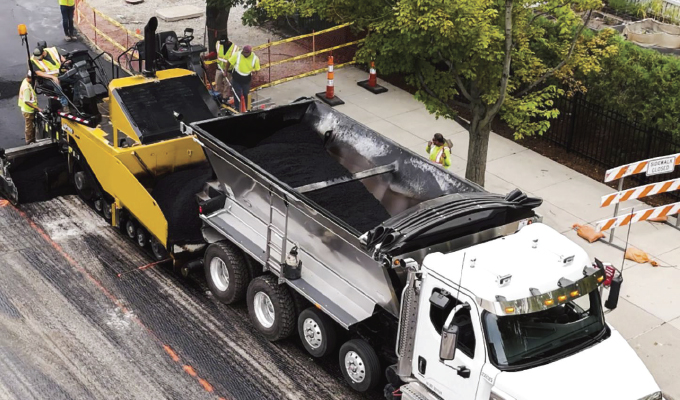
Everywhere we look today, recycling has moved from something we do when it is convenient to an everyday responsibility rooted in common sense. We recycle aluminum cans, cardboard boxes, plastic bottles, used oil, electronics, batteries, steel, concrete, and glass. Homeowners do it. Manufacturers do it. Communities build programs around it. Businesses measure it. The reason is simple: When a material still has value, throwing it away no longer makes sense. It costs money, consumes landfill space, wastes energy, and forces us to mine, refine, haul, and purchase new material when useful material is already sitting right in front of us.
The roadbuilding industry should be one of the clearest examples of that common-sense mindset. Asphalt pavement is not trash when it reaches the end of one service life. It is a valuable engineered material made up of quality aggregate and asphalt binder. Reclaimed asphalt pavement, or RAP, represents decades of investment in stone, oil, trucking, crushing, mixing, and placement. To stockpile it indefinitely, bury it, or treat it as a second-class material misses the point. RAP is not waste. RAP is inventory. When you think about it, the roads the agency already owns are linear quarries, which feature the easiest “mining” method.
THE FULL OPPORTUNITY
For many years, RAP has been discussed primarily as a cost-saving additive in hot mix asphalt. That remains important, but it is not the full opportunity. When RAP is properly processed, graded, mixed with emulsified asphalt, and placed with good construction practices, it can become part of a structural pavement system. Cold in-place recycling, cold central plant recycling, and full-depth reclamation are not just environmental talking points; they are practical construction methods that allow owners and contractors to reuse 100 percent of the existing materials, improve pavement structure, and reduce the need for virgin aggregate and new liquid asphalt.
Emulsified asphalt is a key part of that equation because it allows contractors to coat, bind, and stabilize reclaimed material at ambient temperatures. That means less fuel, fewer emissions, less hauling, and a faster path to rebuilding roads with the material already on the project. Just as important, emulsion-based recycling can create flexible pavement layers that work with the road rather than against it. A properly designed recycled layer can address cracking, improve ride quality, and provide a strong structural foundation for a new wearing surface. Not only that, but the crews will appreciate avoiding the hazards of handling hot materials.
There is nothing questionable about the need. Agencies are being asked to do more with limited budgets. Contractors are dealing with higher material costs, tighter schedules, longer hauls, and increased pressure to reduce the environmental impact of construction. At the same time, our roads still have to perform. They still have to carry trucks, school buses, farm equipment, emergency vehicles, and families every day. Recycling is not a shortcut around quality. Done correctly, it is one of the most prudent ways to deliver quality.
PROVEN SOLUTIONS
These methods are not new, untested ideas. Cold in-place recycling, cold central plant recycling, and full-depth reclamation have been used successfully for years on roads that must carry real traffic in real conditions. Contractors, agencies, and engineers have already proven that, when RAP is properly processed, mixed with the right emulsified asphalt, and compacted correctly, it can produce dependable pavement layers. This is tried-and-true technology backed by sound engineering, practical field experience, and a long record of performance.
In this day and age, recycling road materials is not simply a public relations advantage. It is prudent, necessary, and responsible. We know the aggregate is valuable. We know asphalt binder is valuable. We know hauling material away and hauling new material back in is expensive and inefficient. We as taxpayers, business owners, industry experts, and community members owe it to ourselves and one another to be better stewards of both budgets and resources.
SOLVING PROBLEMS
Contractors have always been problem solvers. We build in the real world, with real constraints, and we succeed by turning practical ideas into reliable results. RAP and emulsified asphalt give us a chance to do exactly that: Take a material that already exists, apply the right technology, and create a pavement structure that is economical, durable, and responsible. Now the industry needs to move from simply talking about recycling to specifying it, designing for it, and building with it. Contractors must bring these solutions forward. Agencies and engineers must evaluate them fairly. Owners must ask whether existing materials can be reused before new materials are hauled in. If we are serious about better roads, better budgets, and better stewardship, recycling must be one of the tools in the toolbox for structural pavements.
for more information
Bergkamp designs and manufactures world-class equipment for the pavement preservation industry. For more, visit www.bergkamp.com.