
Systematization and organization are critical in business management, and this article details how these principles were implemented into FnD Piers and saved the business.
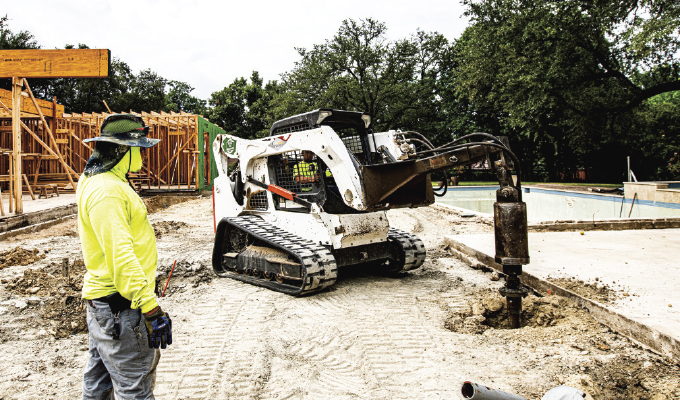
At FnD Piers, we provide foundation drilling services such as helical pier drilling and installation, and concrete and foundation repair. Whenever I first started the business 13 years ago, I was a starving drilling contractor, and 100 percent of my revenue came from the same commodity service, which was digging holes. Back then, we were all using the same straight-shaft pier process, which was very dependent on the timing and soil specifications. It also depended on all six of our subcontractors showing up on time, which as I’m sure you can guess, never happens. Margins were thin, cooperation was low, expenses were high, and jobs took too long. It was a cluster mess of weather delays, soil failure, and builders who pinched pennies by refusing to pay their subcontractors.
THE BIG REALIZATION
Our big break came when we realized that the straight-shaft pier method we were using to drill, which involves filling holes with concrete and rebar, was an absolute animal to manage in poor soil. So, we shifted to helical pier technology. A job that used to take 25 days and cost a builder $150,000 now takes us two days for about $35,000. Helicals don’t need concrete or rebar, which means that we can keep rolling even when it’s raining.
But, we didn’t just stop at installing them. We took a risk, built a facility, and started manufacturing and engineering our own helical piers to ensure that we stayed “fast and dependable.”
Today, 80 percent of our revenue comes from these helical solutions, and I’m glad we switched when we did. I had to keep an open mind to other ideas and solutions that I hadn’t considered rather than staying close-minded and stuck in routine. Sometimes your big break comes from thinking outside the box, sometimes it comes from simply working really hard for a long period of time, and usually it’s both. That was the case for me.
CHECKLISTS AND SYSTEMS
In business, I firmly believe that 100 percent of problems revolve around a lack of systems. If a task is important, it gets a checklist. At FnD, we have checklists for everything, including inventory, fuel, and even the oil in motors. Some might see this as micromanaging, but I see it as business discipline. A $60 hammer, if forgotten, can cost me $100 in overtime labor for two guys to go fetch it. Or, if a seemingly insignificant repair on a machine gets missed and leads to tens of thousands of dollars in broken equipment, we’d be wishing we had “micromanaged” a little bit more to avoid that.
Practically, this looks like “inspecting what we expect” by having our crews and workers send pictures of their completed checklists to operations every morning by 10 a.m. We organize our needs, our inventory, our costs, everything. Everything gets organized, has a checklist, is thought about, and recorded. By minimizing risk for things that are within our control, we reduce the risk our company faces when addressing unforeseen challenges.
HOW OPERATIONS AFFECT CASH FLOW
You can’t forget that cash flow is the lifeblood of a growing business, and the key to receiving cash faster is being an adult about your contracts. We do not take a job without a contract, which forces both sides to have a clear understanding of expectations. Working without a contract has led to many sleepless nights for contractors and owners of companies like ours.
Since we implemented this discipline, we’ve never had to walk away or cancel a job, because the clients understand that a contract is simply how business gets done professionally. Contract confusion can lead to wasted time and resources preparing for a job, rescheduling, double-booking, and all other kinds of inefficiencies. The quickest way to simplify your cash-flow stream and processes is to eliminate inefficiencies.
KEY TO SUCCESS
Success is simple, but that doesn’t mean it’s easy. There’s a formula to follow, but few have the grit required to make it through the starving times. To make sure we’re always chasing progress and never become complacent, we ask ourselves three questions each Monday: What should we start doing? What should we stop doing? What should we keep doing? These questions help us monitor progress and ensure that our systems are doing what they should.
Running a business is like chewing on glass sometimes, but controlling the variables that you can control and minimizing the impact that chance has on your operations is crucial. You can’t control the weather, the cost of supplies or labor, and so much more. Instead, control what you can! You can tighten your cash flow and keep eyes on everything. You can implement checklists, enforce contracts, and sow what you want to reap. Think in terms of “systems,” and do what you can to minimize risk.
about the author
Bill Vaughan is the CEO and co-owner of FnD Piers and co-author of Next Day Helicals. With over 13 years of experience in the foundation industry, he specializes in manufacturing, helical pier engineering, and scaling service-based businesses through rigorous systematization. FnD Piers works in helical pier installation, drilling, manufacturing, sales, and training, along with extensive knowledge in both concrete and foundation repair and leveling.