

The last truck leaves, the generator powers off, and you lock up the main gate for the night. You head home, thinking about tomorrow’s pour or the inspection of the framing. Who is doing what on your site when you’re not there? To burglars and other intruders, an after-hours construction site is like an open-box warehouse full of free stuff to grab and sell.
Worrying about your site overnight isn’t just being paranoid. The numbers back it up. According to the National Insurance Crime Bureau (NICB) and the National Equipment Register (NER), construction site crime is a massive problem, costing between $300 million and $1 billion annually in the U.S. alone. This figure doesn’t even include the indirect costs of project delays and higher insurance premiums.
From a spool of copper wire to a skid steer, equipment parked on your site is an asset. To lose it is not just about the replacement cost, but about holding up construction, irate customers, and the hassle of dealing with insurance companies. So, how do you turn your soft target site into a hard target? It’s all about layers of security.
THINK LIKE A THIEF
If you want to make your site safer, you have to start thinking like a criminal. For a burglar or vandal, a deserted building area is an invitation or a challenge. Your first job is to make it look as unwelcoming as possible.
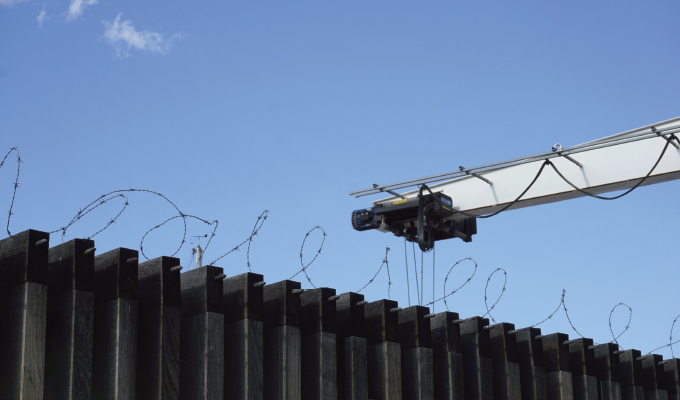
It starts at the perimeter. A flimsy barrier might keep honest people away, but someone with bolt cutters will walk right through it. The first line of defense is a high fence, at least eight feet high, with barbed wire. The gates should also be challenging, secured with heavy-duty locks that are hard to cut.
If you’re looking to break into a place you don’t belong, you also prefer it to be dark. A well-lit area is a huge deterrent. Motion-detection floodlights are excellent because they catch burglars off guard and immediately draw attention to the area.
WHO HAS ACCESS?
When you think of an intruder, you might picture a random stranger. Sometimes, though, the problem is closer to home. Think about who has keys or the codes to your site. Large sites may have many workers and former workers with access. Your gates and fences aren’t going to protect you against people who can just enter with a key or code.
Know who has keys at all times and why. Better yet, use a keycard or keypad system that logs every entry, as in a secure building. That gives you an electronic paper trail. Don’t forget to train your crew. There should be a safe routine for locking up tools and equipment.
EYES AND EARS WHEN NO ONE IS THERE
You can’t be around 24/7, but your security system can. Technology is your best ally after hours.
High-definition surveillance cameras are a must. Place them at locations that capture every entrance point, exit, and area where high-value items are located. The best part of today’s systems is that you can pull up a live feed on your phone or tablet anywhere, anytime. You can watch your site from your couch at home and receive a notification if motion is detected.
Mount the cameras on a monitored alarm system. If someone manages to get through the perimeter, your security company will be alerted and send a response team. Install a hidden GPS tracker on expensive items like generators, bulldozers, or excavators. If the worst happens and someone gets a piece of equipment off the site, you can show the police where it is.
NOTHING REPLACES A HUMAN PRESENCE
Having the latest technology is great, but nothing sends the message “stay away” like the sight of a uniformed security guard driving or walking the grounds with a flashlight. A human presence at all times is often the most potent deterrent of all.
A professional guard can be flexible. They can respond spontaneously to any situation that comes up. They recognize vulnerabilities, handle suspicious individuals, and respond first when something happens, whether it’s an intruder or a ruptured water pipe.
For larger sites or when you are managing multiple projects, a mobile patrol service would be suitable. They provide random, visible patrols at night, keeping potential offenders off balance. They never know when a security car might show up.
PUTTING IT ALL TOGETHER
Securing your building site at night isn’t a question of choosing one technique. It’s putting them together as a cohesive system. Burglars can find a way past a single approach, but it’s not easy for them to deal with a strong fence, floodlights, access control, cameras, alarms, and guards. With all that, they’ll likely search for an easier target.
The optimal solution is always a customized one, designed especially for your particular location and threats. Working with security specialists who understand the specific issues the construction industry faces is a strong foundation for your security. You can then focus on your projects, assured that your site is secure even after your workers have headed home.
about the author
Omar Choudhry is the founder of Comprehensive Security Services, Inc. (CSSI), a leading provider of armed and unarmed security solutions in California and Nevada. Since 1989, he has specialized in scalable protocols for high-risk environments, earning CSSI a reputation for reliability and innovation. His leadership has driven the company’s growth through certifications, hybrid patrol fleets, and rigorous training. Omar remains committed to compliance, emergency response, and client-focused communication. For more, visit www.comprehensivesecurity.net.