

Six years ago, the owner of Zippity Split Plumbing made a calculated decision that would reshape our entire business model. Rather than compete in Phoenix’s saturated traditional plumbing market, we decided to specialize in cured-in-place pipe (CIPP) lining technology. Today, 80 percent of our work involves trenchless repairs, and we can complete up to three CIPP installations in a single day. The key to this transformation wasn’t just choosing the right market niche; it was finding equipment that could handle Arizona’s brutal conditions while delivering consistent, reliable results.
THE ARIZONA CHALLENGE
Phoenix presents unique challenges for sewer repair contractors. For example, many homes built in the 1950s and 1960s sit on concrete slabs with cast iron and clay pipes running underneath. Unlike other regions with crawl spaces, accessing AZ’s pipes traditionally meant jackhammering through floors and trenching through homes. A typical repair could take a full day of excavation, followed by weeks of reconstruction work that could push total project costs to many tens of thousands of dollars when factoring in flooring, walls, and paint restoration, not to mention the inconvenience to the property owner.
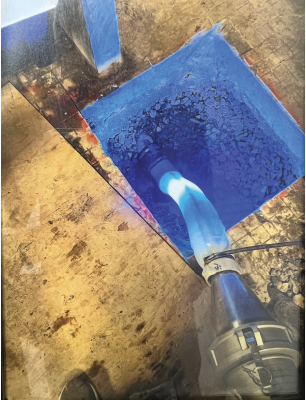
With CIPP, a flexible liner soaked in resin is inserted into the damaged pipe and inflated using compressed air, then hardened using ultraviolet light. As it cures, the liner forms a new, seamless pipe inside the old one, usually with little to no excavation required. This process repairs cracks, leaks, and other structural problems while creating a durable, jointless pipe that can extend the service life of the line for many years.
Arizona’s extreme heat adds another layer of complexity. Summer temperatures today regularly exceed 115 degrees, and equipment mounted in service trailers can experience even higher temperatures. Any compressor system needs to handle these conditions while maintaining consistent pressure for the CIPP process, where even minor moisture contamination can damage the circuitry of sensitive UV LED curing systems.
THE RIGHT EQUIPMENT SOLUTION
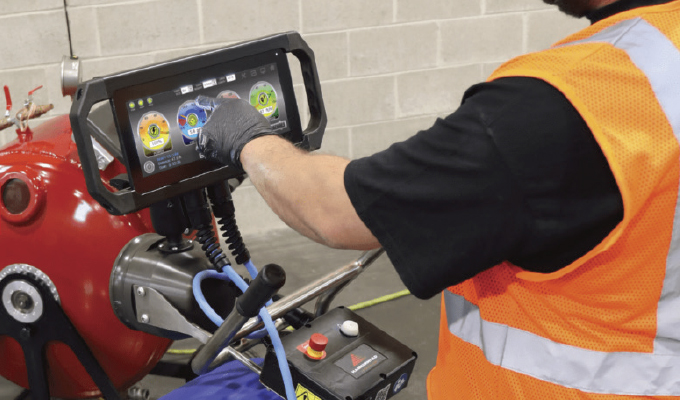
After experiencing repeated failures with our original CIPP system, including head-component failures when navigating 90-degree bends in three-inch pipes, we switched to Hammerhead’s Trenchless Bluelight LED CIPP system in April 2025. Hammerhead’s decision to pair it with a Vanair Viper 70 CFM rotary screw compressor has proven transformative for our operation.
The Viper delivers 70 cubic feet per minute at 125 PSI, providing more than enough capacity for our typical residential lateral repairs ranging from 25 to 30 feet, though we can handle lines up to 160 feet of four-inch pipe. Unlike our previous compressor, which resembled an oversized generator with weak mounting legs that often broke off during transport, the Viper can be ordered with or without a zero-turn cart. Without a cart, its compact envelope fits perfectly on a sliding tray system we built into our service trailer.
Everything from the lighted control board to the key placement gives you the information you need at a glance. The compressor is built to handle real field conditions, not just perform in a showroom.
THE CRITICAL ROLE OF PHYSICS
One aspect of CIPP installation that contractors new to the technology often overlook is moisture control. When you compress air, you’re also compressing whatever moisture is in that air. At 220 degrees Fahrenheit coming out of the compressor, combined with oxygen and compressed moisture, you have perfect humid conditions for corrosion. This is particularly problematic for the UV LED arrays used in our advanced CIPP systems, where moisture can corrode the connection points between the individual LEDs that cure the resin.
The Vanair after cooler, roughly the size of a suitcase, has become an essential component of our system. By cooling the compressed air under pressure, it causes 90 percent of the moisture to condense and drop out before reaching our secondary dryer. We’ve hard-mounted it in the trailer with all air hoses permanently connected, controlled by a simple switch our technicians activate as needed. This setup has virtually eliminated the moisture-related failures that plague many CIPP operations.
OPERATIONAL EFFICIENCY
Our typical CIPP installation process now follows a streamlined workflow that would have been impossible with our previous equipment. After initial camera inspection, pipe cleaning and, if necessary, jetting, the actual lining process takes just three to four hours for most residential jobs.
The process involves cutting a liner to exact measurements, mixing and applying the calculated amount of resin, and “wetting out” the liner with a specialized roller that ensures consistent thickness. The liner, which starts inside out, is then inverted into the pipe using air pressure from the Vanair compressor. Once in place, we can inspect with the Bluelight camera system before curing, adjusting air pressure as needed to eliminate wrinkles or improve positioning.
What sets the Hammerhead system apart is its reliability under pressure, if you’ll excuse the pun. The compressor unit automatically throttles down once the liner is inflated, maintaining steady pressure without wasting fuel or generating excessive heat. The automatic start-stop function responds to air demand, while the robust, direct-drive rotary screw design eliminates the belt-maintenance issues common with reciprocating compressors.
For contractors evaluating CIPP equipment, understanding the true cost comparison is crucial. While a complete pipe relining might cost a customer $20,000, the alternative of trenching through the home could easily reach $100,000 after reconstruction. This value proposition becomes clear to homeowners once they understand the full scope of traditional repair.
From an operational standpoint, the efficiency gains are equally compelling. With our current setup, we can confidently schedule multiple jobs per day, knowing equipment failures won’t derail our timeline. Vanair’s lifetime warranty on its “air end,” contingent on following prescribed maintenance schedules, provides additional peace of mind. Annual oil changes and basic maintenance are all that’s required to keep the unit running reliably.
For contractors considering CIPP technology, my advice is simple: Don’t shop on price alone. Sure, there are cheaper systems available, but take my word for it, the backend costs in repairs, downtime and failed installations will quickly erase any initial savings. The Hammerhead and Vanair combination might require a larger upfront investment, but it makes everything else simple, as I tell other contractors at trade shows.
The learning curve for CIPP is somewhat significant, which is why we’ve even developed wholesale partnerships with traditional plumbers who handle other aspects of jobs while we provide specialized, sub-contracted lining services. As more folks enter this market, having reliable, professional-grade equipment becomes even more critical for maintaining reputation and efficiency.
about the author
Roger Pippin is general manager and senior plumber at Zippity Split Plumbing in the Phoenix, Arizona, metro area, where he oversees field operations, customer concerns and complex repair projects. With more than two decades of hands-on plumbing experience, he specializes in cured-in-place pipe (CIPP) trenchless solutions that minimize disruption for homeowners while delivering durable results. Pippin leads a growing team of technicians, helping them keep jobs on schedule and maintain the high standards that have made Zippity Split a trusted name in one of the nation’s most competitive plumbing markets.